- New
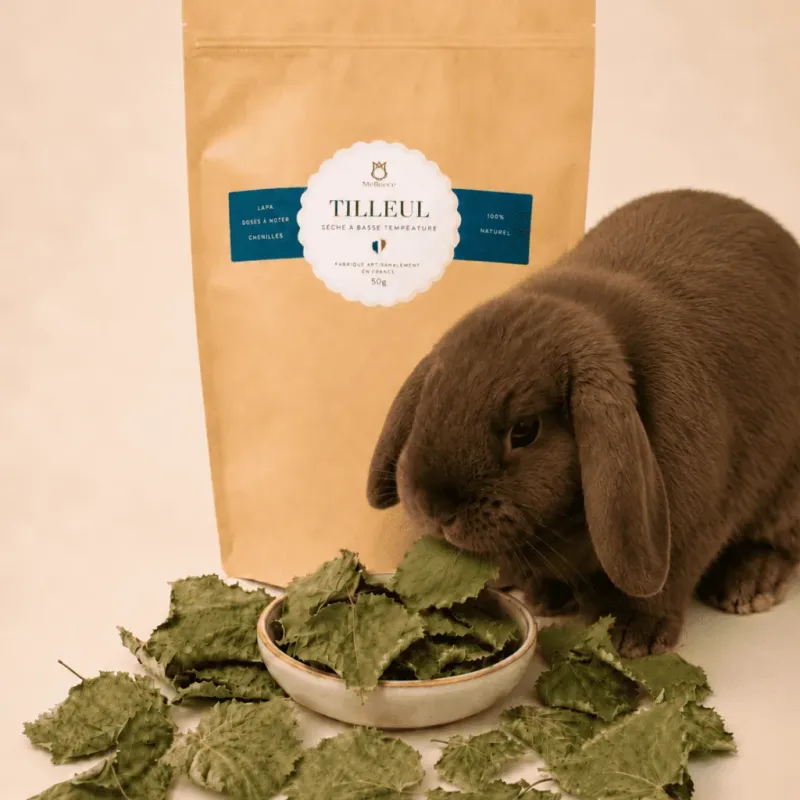


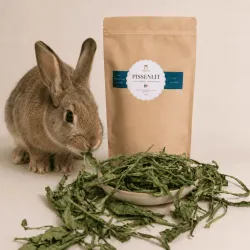
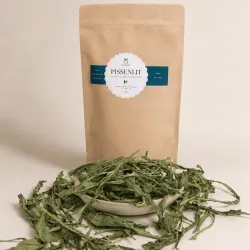
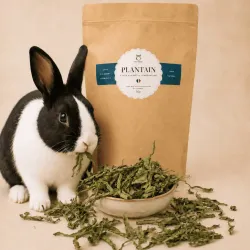
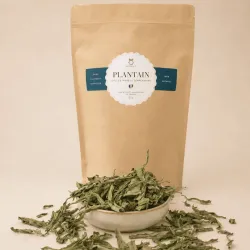
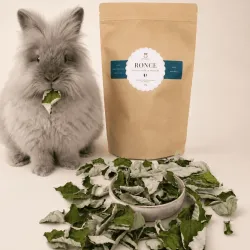
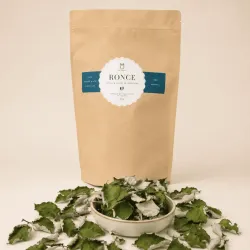
Merlin&Cie dried linden leaves are a gentle, naturally fragrant botanical treat for rabbits, guinea pigs, chinchillas and degus. Their light texture and delicate plant scent help vary the plants offered, enrich hay and encourage natural foraging behaviours.
Merlin&Cie dried linden leaves are a natural botanical treat for rabbits, guinea pigs, chinchillas and degus. Gentle, light and delicately fragrant, they add a new scent and a different texture to a varied rotation of dried plants.
Offered by hand, mixed into hay or hidden in a suitable foraging activity, they encourage the animal to search, sniff, sort and nibble. They are easy to include in everyday feeding, always as a complement to hay and a balanced diet.
Merlin&Cie linden leaves are harvested, low-temperature dried and artisanally packed in Auvergne, France. This simple preparation helps preserve a recognisable, light and naturally fragrant leaf, with nothing unnecessary added.
Dried linden leaves should remain a botanical treat or complementary feed. They do not replace hay, which should always be available and form the basis of the diet of rabbits and small herbivores.
Linden is appreciated for its soft, recognisable plant scent. As dried leaves, it offers a light treat that can help bring variety to the diet of small herbivores.
A few leaves tucked into the hay can make mealtime more stimulating. The animal takes time to forage, select and discover a different scent, naturally enriching its feeding environment.
Dried linden leaves can be offered in several ways:
As with any new plant, it is best to start with a small amount, then observe your animal’s tolerance before offering more.
Offer as a complement to hay and a balanced diet. Does not replace hay. Introduce gradually.
As linden leaves may naturally contain minerals, including calcium, it is best to offer them in moderate amounts, especially to animals with a history of urinary issues. If in doubt, ask a vet specialised in exotic pets.
100% dried linden leaves.
Crude fibre: 23.0% — Crude protein: 13.5% — Crude fat: 2.6% — Crude ash: 8.3%* — Moisture: 10%**
* Crude ash corresponds to the minerals naturally present in the plant.
** Estimated moisture for a dry, brittle plant.
15, 50 or 100 g bag.
Store in a dry, cool place away from light. Close the bag tightly after opening to preserve the quality, texture and plant scent of the leaves.
Yes, dried linden leaves can be offered to adult rabbits as a botanical treat, in small amounts and as a complement to hay. Their light texture and gentle plant scent help vary the dried plants offered in everyday feeding.
They should remain an occasional complementary feed. Hay must always be available and remain the basis of the rabbit’s diet.
For an adult rabbit, you can offer 1 to 3 dried linden leaves a few times a week, depending on its size, usual diet and digestive tolerance.
When offering them for the first time, it is best to start with a small amount, then observe your animal’s reaction before offering more.
Yes, dried linden leaves can be mixed into hay to enrich mealtime. Their gentle plant scent can encourage the rabbit or small herbivore to forage, sniff and sort through its ration.
They can also be offered by hand or placed in a suitable foraging mat.
No, dried linden leaves do not replace hay. They should remain a botanical treat or complementary feed, offered in small amounts.
Hay remains essential for fibre intake, natural tooth wear and the balanced diet of rabbits, guinea pigs, chinchillas and degus.
Yes, dried linden leaves can be offered to guinea pigs, but only in small amounts. One small leaf from time to time may be enough, always as a complement to hay and a suitable diet.
Yes, dried linden leaves can be offered to chinchillas and degus occasionally. For these small herbivores, which can be sensitive to excess in their diet, it is best to keep to ½ to 1 small leaf from time to time.
Linden leaves naturally contain plant fibre and minerals present in the leaf, including calcium. This is why it is best to offer them in moderate amounts, especially to animals that have already had urinary issues.
If you have any doubt about your rabbit’s or small herbivore’s diet, ask a vet specialised in exotic pets for advice.
You might also like