
Autumn is probably one of the most beautiful seasons for walking your dog: the light is soft, the forest smells of...
Latest posts
-
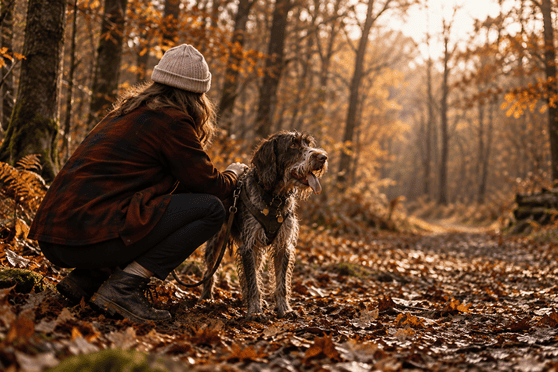 Autumn with your dog: small dangers to watch out for on walksRead more
 -
 Pet Parents: Welcome to a Club We’re (Finally) Happy to Own Up ToRead more
Just ten years ago, calling yourself your cat’s “parent” would have raised a few eyebrows. People would smile...
-
 Halloween with your pet: ideas, treats and precautions for dogs, cats, rabbits and horsesRead more
Halloween is slowly making its way into our homes, with pumpkins appearing on doorsteps and orange garlands...
-
 Rewarding your dog without spoiling them: finding the right balance between treats, praise and playRead more
Treats, praise or play: rewarding your dog well is not about giving more, but about choosing the right moment and the...
-
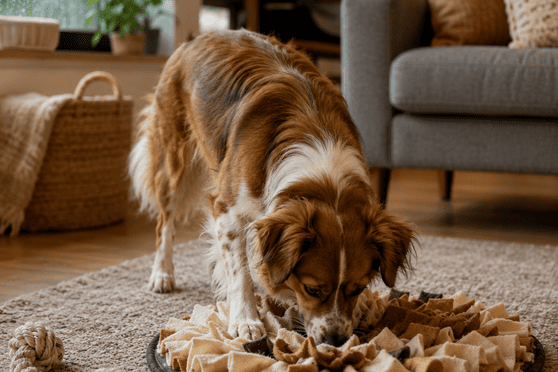 How to Keep Your Dog Busy at Home: 4 Situations and SolutionsRead more
It has been raining since this morning, and the evening walk ended at the corner of the street. Your dog has just had...
-
 Waste-Conscious Treats for pets: giving pleasure without wasteRead more
Seeing a close date on a pet product can make you hesitate. That is perfectly normal. When it comes to our...
-
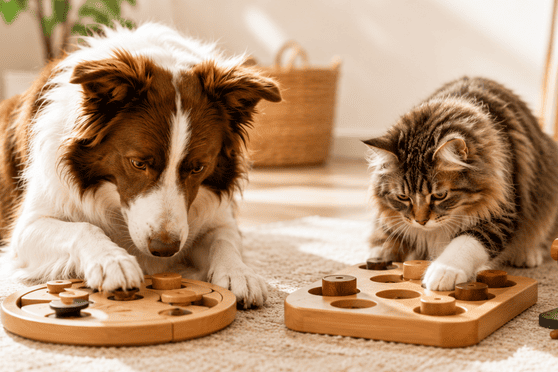 Intelligence Games for Dogs and Cats: The Secret to a Happy (and Finally Tired) PetRead more
He has already chewed through half the sofa. He barks at the door as soon as you leave for work. She spends all day...
-
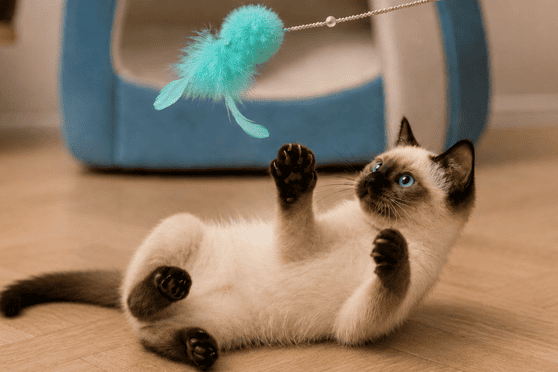 What toys should you choose for your cat? Understanding their preferences to help them play betterRead more
All cats play, but not always in the same way. Some pounce at the slightest movement, others prefer to watch for a...
-
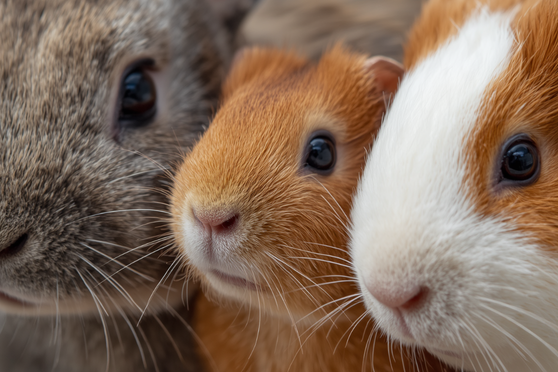 Adopting a NAC: the questions to ask before falling for oneRead more
Rabbit, guinea pig, hamster, pet rat, ferret, gerbil, bird or reptile: NAC often appeal because of their small size,...
-
 Dog care: what is it for, and what should you do every day?Read more
Caring for your dog is not only about feeding them, walking them and giving them attention. Their skin, coat, paw...
Blog categories
Search in blog
What Is the Ideal Environment for My Rabbit? Cage, Enclosure or Free Roaming at Home
The domestic rabbit is still too often seen as a “cage animal”. Yet current knowledge in animal behaviour and exotic (NAC) veterinary medicine paints a very different picture: rabbits are intelligent, active and sensitive animals with high environmental needs. Providing a suitable living environment is essential for their physical health, emotional balance and longevity.
Cage or enclosure? Full freedom or supervised roaming? What does a rabbit truly need, and what dangers should be anticipated in a home environment? Let’s take a closer look.
The rabbit: an active, curious and territorial animal
Contrary to popular belief, rabbits are not sedentary animals. In natural conditions, they cover long distances each day, dig, explore, observe their surroundings and alternate periods of intense activity with rest.
Their fundamental needs include: the ability to move freely, clearly defined areas for eating, resting and toileting, daily mental and physical stimulation, and a predictable, secure environment. An unsuitable habitat can quickly lead to stress, digestive issues, dental problems, weight gain and frustration-related behaviours.
Cage, enclosure or free roaming: what do experts recommend?
The cage: not suitable as a main living space
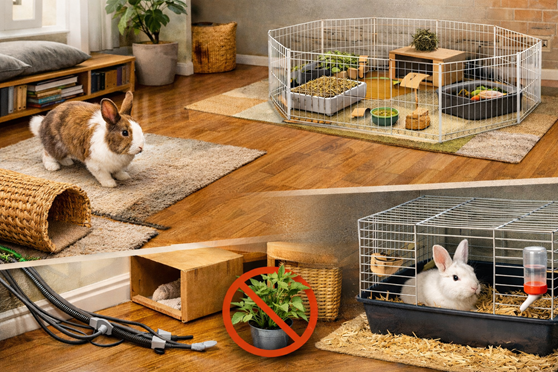
A traditional cage, even a large one, does not allow a rabbit to hop properly, stand fully upright or express natural behaviours. It may be used as an open resting area, but should never be the sole living space.
The enclosure: the recommended solution
An indoor or secure outdoor enclosure is now considered the best compromise for most households. It provides enough room for movement, allows a clear organisation of space (litter area, resting zone, feeding area), and ensures safety, particularly when humans are not present.
As a general guideline, aim for at least 2 m² of permanently accessible space, supplemented with several hours of free roaming each day if the enclosure is limited in size. The larger and more enriched the space, the better for the rabbit’s wellbeing.
Free roaming in the home: possible, but well managed
A rabbit can live free-roaming in a home, provided the environment is adapted and secured. This includes protecting electrical cables, removing toxic plants, securing cleaning products and setting clear boundaries. Free roaming is ideal when the home is designed with the rabbit’s needs in mind.
The litter area: central to wellbeing
Rabbits are naturally clean animals and usually choose a specific corner for toileting. A sufficiently large litter tray placed in that preferred area supports good litter habits. Plant-based litters (hemp, flax, recycled paper) are recommended, while mineral or scented cat litters should be avoided.
Household dangers not to underestimate
An indoor environment presents specific risks for rabbits, who explore with their mouths and have a natural need to chew. Common dangers include electrical cables, toxic plants, household chemicals, unstable furniture, unsecured stairs and small objects that may be swallowed.
“Rabbit-proofing” the home is essential, especially for free-roaming rabbits: protect cables, block hazardous areas and provide appropriate chewing alternatives.
Essential daily needs
An ideal environment is not only about space. It must also meet key daily needs: unlimited access to hay, a balanced diet, fresh water, chewing materials for dental health, hiding places for security, and daily enrichment (foraging activities, tunnels, cardboard boxes, platforms and toys).
Rabbits are social animals, but they do not enjoy constant handling. Respecting their rhythm and offering interaction on their terms helps build trust.
Indoor or outdoor living: a matter of conditions, not principle
A rabbit can live indoors all year round. Outdoor housing is only suitable if the setup is perfectly adapted: insulated shelter, protection from predators, extreme temperatures, humidity and parasites. In the UK, many exotic vets recommend indoor living, which offers greater stability and safety.
Conclusion
Providing an ideal environment for a rabbit is not about indulgence—it is about meeting biological and behavioural needs. Spacious enclosures, supervised freedom, appropriate litter areas, household safety and daily enrichment are the foundations of a healthy rabbit.
A well-settled rabbit is more active, curious and confident—and builds a much richer relationship with the humans sharing its life.
FAQ – What science tells us about the rabbit’s environment
Sources: recommendations from exotic (NAC) veterinarians, publications by rabbit welfare organisations (such as the House Rabbit Society and the Rabbit Welfare Association & Fund), and observations from shelters and veterinary practices.
Does a rabbit really need a lot of space?
Yes. Behavioural studies show that restricted movement is associated with health and welfare issues. Space is not a luxury but a physiological necessity for rabbits.
Can a rabbit be happy in a cage if it gets daily exercise?
In most cases, no. Even with daily outings, a cage limits the rabbit’s ability to choose when to move, rest or explore. Continuous access to a suitable living area is strongly recommended.
Does a rabbit need a stable environment?
Yes. Rabbits are sensitive to change. Frequent or sudden modifications can increase stress and affect appetite and digestion. Stable reference points help them feel secure.
Can rabbits be litter trained?
Yes—and this behaviour is largely natural. Rabbits instinctively choose a toileting area. Providing a suitable litter tray in the chosen spot reinforces this behaviour. Neutering often improves litter habits.
Is full free roaming beneficial for every rabbit?
Not always. While freedom supports natural behaviours, an overly large or poorly structured space can be stressful for some rabbits. A balance between freedom and a defined safe base works best.
Do rabbits get bored without stimulation?
Yes. Boredom in rabbits is well documented and may result in inactivity, weight gain or repetitive behaviours. Environmental enrichment is essential for mental wellbeing.
Can a rabbit live alone without suffering?
Rabbits are social animals. Living alone is not necessarily harmful if the environment is rich and human interaction is appropriate. However, studies show that bonded pairs often display lower stress levels and more natural behaviours.
Do rabbits recognise their environment?
Yes. Rabbits build a mental map of their territory, including safe zones and hiding places. Sudden changes can cause temporary anxiety, which is why gradual adjustments are recommended.
Does the environment influence the relationship with humans?
Indirectly, yes. A rabbit that feels safe and respected is more curious and more likely to initiate interaction, strengthening the human–animal bond.
Related posts
-
 Candy Horse Treats for Horses – Natural & Delicious
Discover Candy Horse treats for horses: natural, handcrafted, and tasty. Reward your horse with healthy snacks and...Read more
Candy Horse Treats for Horses – Natural & Delicious
Discover Candy Horse treats for horses: natural, handcrafted, and tasty. Reward your horse with healthy snacks and...Read more -
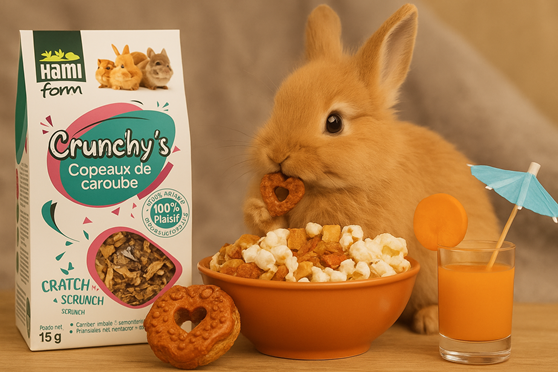 Healthy Rabbit Treats: Combining Taste and Nutrition
Treat your rabbit with healthy and natural snacks! Discover which treats to favor (herbs, flowers, hay, dried...Read more
Healthy Rabbit Treats: Combining Taste and Nutrition
Treat your rabbit with healthy and natural snacks! Discover which treats to favor (herbs, flowers, hay, dried...Read more -
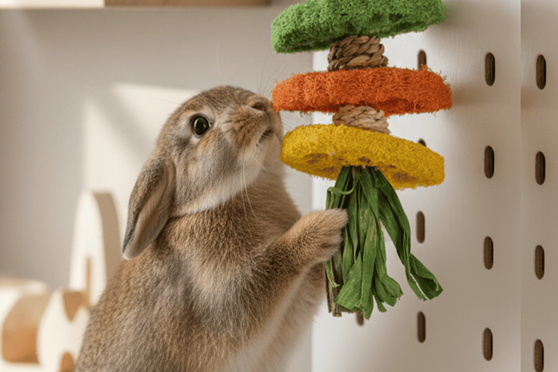 Chew Toys for Rabbits: Essential for Their Well-Being and Teeth
Our rabbits, like all good little nibblers, love to chew! What might seem like a simple pastime is in fact vital to...Read more
Chew Toys for Rabbits: Essential for Their Well-Being and Teeth
Our rabbits, like all good little nibblers, love to chew! What might seem like a simple pastime is in fact vital to...Read more -
 Does My Dog Need a Comfort Toy?
A comfort toy is more than just a plaything. It offers reassurance, reduces stress, and helps ease loneliness –...Read more
Does My Dog Need a Comfort Toy?
A comfort toy is more than just a plaything. It offers reassurance, reduces stress, and helps ease loneliness –...Read more -
 Horse Toys: How to Keep Your Horse Busy and Prevent Boredom
Horses are naturally curious, social, and active animals that need variety and stimulation to thrive. When deprived...Read more
Horse Toys: How to Keep Your Horse Busy and Prevent Boredom
Horses are naturally curious, social, and active animals that need variety and stimulation to thrive. When deprived...Read more
Leave a comment