
Autumn is probably one of the most beautiful seasons for walking your dog: the light is soft, the forest smells of...
It can take a few days to several weeks depending on the cat’s personality. A gradual introduction is key to reducing stress.

Autumn is probably one of the most beautiful seasons for walking your dog: the light is soft, the forest smells of...
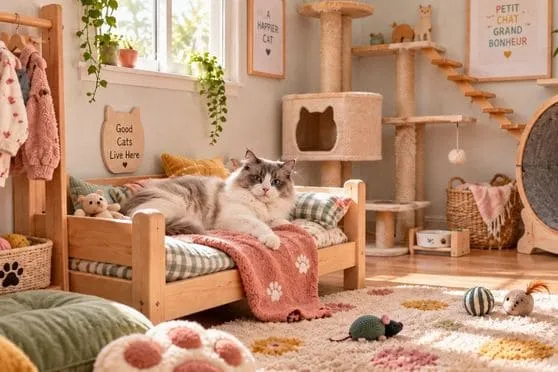
Just ten years ago, calling yourself your cat’s “parent” would have raised a few eyebrows. People would smile...

Halloween is slowly making its way into our homes, with pumpkins appearing on doorsteps and orange garlands...

Treats, praise or play: rewarding your dog well is not about giving more, but about choosing the right moment and the...

It has been raining since this morning, and the evening walk ended at the corner of the street. Your dog has just had...
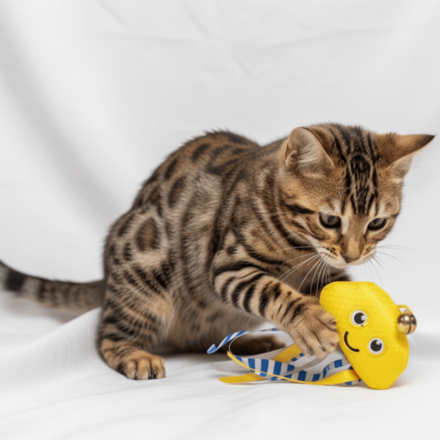
Seeing a close date on a pet product can make you hesitate. That is perfectly normal. When it comes to our...
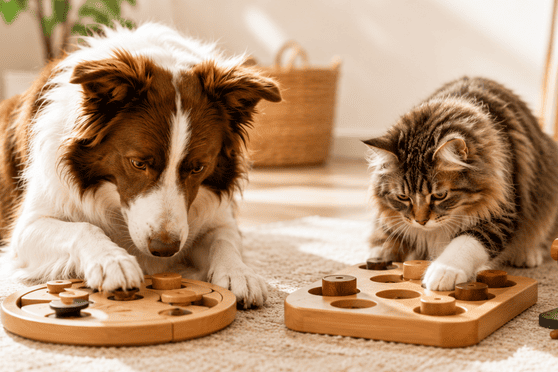
He has already chewed through half the sofa. He barks at the door as soon as you leave for work. She spends all day...
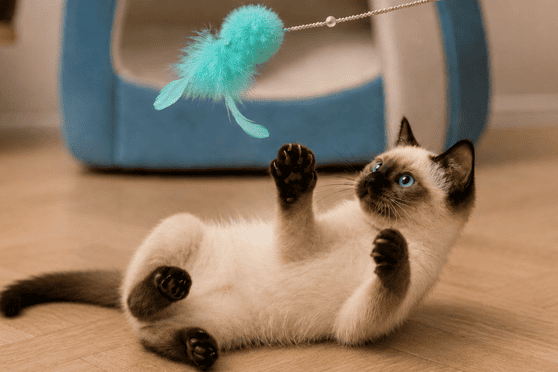
All cats play, but not always in the same way. Some pounce at the slightest movement, others prefer to watch for a...

Rabbit, guinea pig, hamster, pet rat, ferret, gerbil, bird or reptile: NAC often appeal because of their small size,...

Caring for your dog is not only about feeding them, walking them and giving them attention. Their skin, coat, paw...
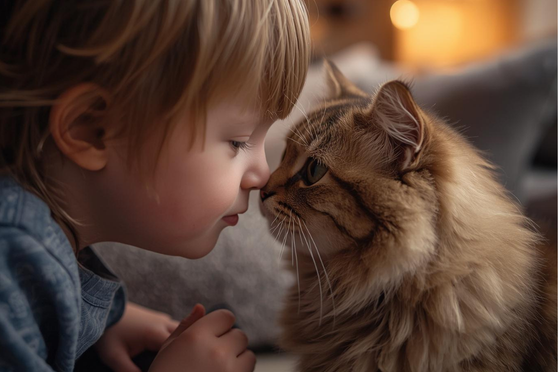
Welcoming a new cat into a home that is already alive with people and animals is never just a simple introduction. It is a quiet rebalancing. Each individual — human or animal — has to adjust, redefine boundaries and find their place again.
For a cat, this transition is particularly delicate. As a territorial animal deeply attached to routine, any change is first perceived as a potential threat before it can be accepted as part of everyday life.
This is why success does not depend on the first meeting, but on everything that happens before, during and after.
 Between cats: managing territory, not forcing a relationship
When a new cat arrives, the challenge is not social in the human sense. It is territorial.
A cat does not naturally seek companionship. It seeks stability: access to resources, control over its environment and a sense of safety.
This is why rushing introductions is one of the most common mistakes.
A successful introduction usually follows a gradual structure:
This process may feel slow — but it is essential for long-term balance.
Hissing, growling, avoidance… are often misunderstood.
They are not failures. They are communication tools.
The cat is expressing distance, not rejection.
What should raise concern is not the presence of tension, but its persistence:
In multi-cat households, simply duplicating resources is not enough.
They must also be spatially separated.
Two bowls placed side by side are often perceived as a single resource.
True security comes from distance and accessibility.
Dogs and cats do not communicate in the same way.
What a dog expresses as curiosity can be perceived as intrusion by a cat.
What a cat expresses as retreat can trigger a chase response in a dog.
 The key factor: the dog’s energy level
The success of the relationship depends less on the cat than on the dog’s ability to regulate itself.
A calm dog allows observation. An excited dog prevents it.
A cat must always have the option to withdraw.
Without an escape route, a cat may feel trapped — and react defensively.
Even a gentle child can be unpredictable from a cat’s perspective.
Quick movements, sudden sounds and inconsistent behaviour can all be perceived as threats.
A cat does not interpret intention — it reacts to perception.
Rather than multiplying rules, it is more effective to create a clear structure:
The adult’s role is essential: translating feline body language into something the child can understand.
Ears back, tail flicking, body tension — these are signals, not moods.
You do not go to the cat — the cat comes to you.
This simple principle prevents most negative interactions.
In many cases, environment shapes behaviour more than training ever will.
A stressed cat in a poorly adapted environment will remain stressed, regardless of intentions.
When these needs are met, tension often decreases naturally.
Height gives the cat control.
It allows observation without exposure, distance without isolation.
Sometimes, a single elevated spot is enough to transform the entire dynamic.
Not every conflict is a problem.
However, certain signs require attention:
In these cases, slowing down and restructuring the environment is often necessary.
A successful cohabitation is never accidental.
It is built on understanding, patience and a carefully designed environment.
Living together does not necessarily mean being close — it means being able to coexist without tension.
It can take a few days to several weeks depending on the cat’s personality. A gradual introduction is key to reducing stress.
Start by keeping them in separate rooms. Exchange scents (blankets, cushions), then allow gradual supervised meetings.
Hissing, growling, fighting, avoidance, or urine marking indicate stress or temporary incompatibility.
Provide multiple resources (food bowls, litter boxes, resting areas) and respect each cat’s territory. Calming pheromones can help.
Yes, ideally one litter box per cat plus one extra. Food bowls should also be separate.
Often yes, but it depends on temperament. Kittens are usually easier to accept.
Do not intervene with your hands. Distract them and separate if necessary.
Yes, in some cases long-term separation is necessary.
Start with controlled meetings at a distance, keeping the dog on a leash. Let the cat approach at its own pace and provide a safe escape area.
Chasing, excessive barking, growling, or a cat constantly hiding or refusing to eat.
Yes, in most cases, especially with a gradual introduction and a calm, well-trained dog.
Teach the child to respect the cat and never disturb it. Always provide the cat with a quiet, safe space.
Scratches or bites if the cat feels stressed or handled roughly. Supervision is essential.
 Candy Horse Treats for Horses – Natural & Delicious
 Healthy Rabbit Treats: Combining Taste and Nutrition
 Chew Toys for Rabbits: Essential for Their Well-Being and Teeth
 Does My Dog Need a Comfort Toy?
 Horse Toys: How to Keep Your Horse Busy and Prevent Boredom
Leave a comment