A scratched sofa, a fraying rug, a favourite armchair under attack… Living with a cat often means facing this challenge — especially if you value a well-kept, thoughtfully designed home.
Yet scratching is not defiance or spite. It is a natural, physiological and emotional behaviour. The goal is not to stop your cat from scratching, but to provide an appropriate alternative — stable, attractive and placed where it truly makes sense.
Here’s how to respect your cat’s instinct while protecting your interior — without conflict, punishment or aesthetic compromise.
Why scratching is essential behaviour
To find a lasting solution, it is important to understand the purpose behind scratching. In behavioural science, persistent behaviour almost always serves a function.
Claw maintenance
Scratching removes the outer worn layers of the claws. It is natural grooming, not destructive intent.
Full-body stretching
When a cat scratches, they engage their shoulders, back and spine. It is a complete stretch, often seen after resting.
Territory marking
Scratching leaves both visible and scent markers. This reinforces a sense of security within their environment.
Emotional regulation
During periods of change or stress, scratching may increase. It can function as a form of self-soothing.
Why traditional scratching posts often fail
A small sisal post placed discreetly in a corner rarely solves the problem.
- The structure may be too small or unstable.
- It may be positioned away from the main living area.
- It offers no added value such as a hideaway or play element.
A scratcher that is hidden away is often a scratcher that is ignored.
The solution: integrate scratching furniture into your living space
Rather than concealing scratching furniture, consider integrating it deliberately into your interior design. When it becomes part of the room, it is far more likely to be used.
An effective scratcher should be:
- Stable enough for a full stretch,
- Placed in a central living area,
- Aesthetically aligned with your home.
Design scratchers that protect your furniture beautifully
Cosy & retro: hideaway and scratcher in one
Models that combine a retreat space with a scratching surface are particularly effective, such as the Retro TV Cat House & Scratcher or the 2-in-1 Sardine Tin Cat Scratcher & Hideout.
These pieces offer comfort and security while blending naturally into a refined interior.
Play and stimulation combined
Indoor cats benefit greatly from mental and physical stimulation. The Flower Cat Scratcher & Chase Toy combines scratching with interactive play, helping to reduce boredom-driven behaviour.
A design statement piece
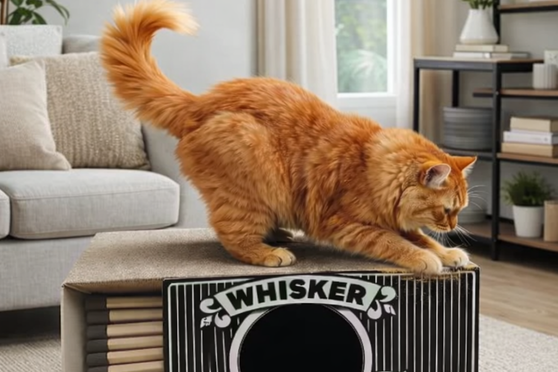
Some scratchers become genuine conversation pieces. The Matchbox-Shaped Design Scratching Furniture protects your sofa while adding originality and character to your living space.
Where should you place a scratcher?
- Close to the area your cat currently scratches.
- In the main living space rather than a secluded corner.
- Near a resting spot, as many cats scratch after waking.
Once adopted, the scratcher can be moved gradually if needed.
Conclusion
Your cat is not scratching against you — they are expressing a natural instinct. By choosing a stable, well-positioned and beautifully designed scratcher, you protect your furniture while respecting their wellbeing.
A thoughtfully selected scratcher is not a compromise. It is a balance between instinct and interior harmony.














Leave a comment