
Autumn is probably one of the most beautiful seasons for walking your dog: the light is soft, the forest smells of...
Latest posts
-
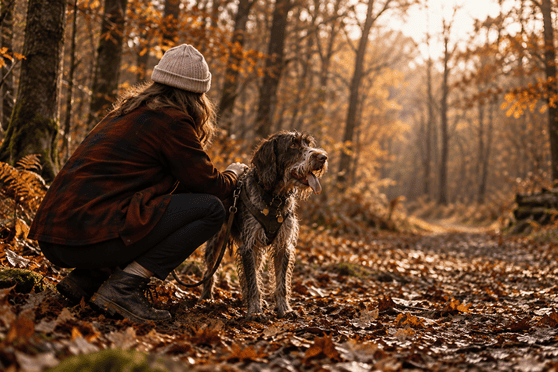 Autumn with your dog: small dangers to watch out for on walksRead more
 -
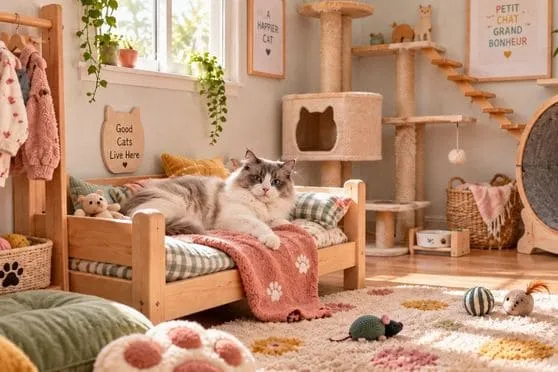 Pet Parents: Welcome to a Club We’re (Finally) Happy to Own Up ToRead more
Just ten years ago, calling yourself your cat’s “parent” would have raised a few eyebrows. People would smile...
-
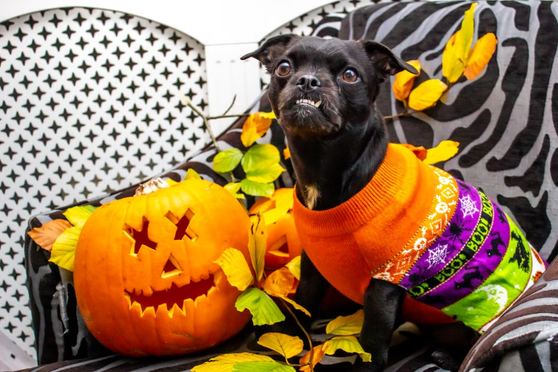 Halloween with your pet: ideas, treats and precautions for dogs, cats, rabbits and horsesRead more
Halloween is slowly making its way into our homes, with pumpkins appearing on doorsteps and orange garlands...
-
 Rewarding your dog without spoiling them: finding the right balance between treats, praise and playRead more
Treats, praise or play: rewarding your dog well is not about giving more, but about choosing the right moment and the...
-
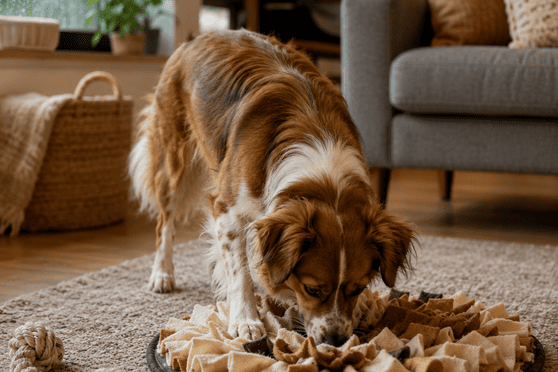 How to Keep Your Dog Busy at Home: 4 Situations and SolutionsRead more
It has been raining since this morning, and the evening walk ended at the corner of the street. Your dog has just had...
-
 Waste-Conscious Treats for pets: giving pleasure without wasteRead more
Seeing a close date on a pet product can make you hesitate. That is perfectly normal. When it comes to our...
-
 Intelligence Games for Dogs and Cats: The Secret to a Happy (and Finally Tired) PetRead more
He has already chewed through half the sofa. He barks at the door as soon as you leave for work. She spends all day...
-
 What toys should you choose for your cat? Understanding their preferences to help them play betterRead more
All cats play, but not always in the same way. Some pounce at the slightest movement, others prefer to watch for a...
-
 Adopting a NAC: the questions to ask before falling for oneRead more
Rabbit, guinea pig, hamster, pet rat, ferret, gerbil, bird or reptile: NAC often appeal because of their small size,...
-
 Dog care: what is it for, and what should you do every day?Read more
Caring for your dog is not only about feeding them, walking them and giving them attention. Their skin, coat, paw...
Blog categories
Search in blog

Why does the death of a pet hurt so much? Understanding pet bereavement
Losing a pet is a difficult experience, often poorly understood by those around us.
People may try to comfort us with phrases such as “It was only a cat”, “You’ll get another dog” or “Time will make it easier”. These words are usually well-intentioned — and yet, for someone who has just lost a beloved companion, they can feel painfully wrong.
Pet bereavement is grief in its own right, even though it is still too often misunderstood or minimised.
Why do we suffer so deeply after losing a pet? Why can that emptiness feel so overwhelming? And why is it sometimes so difficult to make others understand?
A daily life turned upside down
A pet shares far more than simply a home. It enters our lives, our hearts, our deepest routines. It is there in the morning, in the evening, in joyful moments as well as difficult times. It watches without judging, accompanies without speaking, and sometimes makes its presence felt with gentleness, humour or affection.
With a pet, the bond is often marked by a rare sincerity, free from many of the codes and unspoken tensions that can complicate human relationships. We love, we care, we share everyday life — and little by little, that companion becomes an essential presence that helps shape the rhythm of our days.
And when that presence disappears, we often feel deeply disoriented.
Pet bereavement is not an abstract sadness. It settles into very concrete details: that companion is no longer there asking for our attention, our affection, our presence. In the first days, it is not unusual to think we still hear them, catch sight of them from the corner of our eye, or find ourselves waiting for them without even realising it. And suddenly, the house feels terribly quiet.
Why can this pain feel so intense?
The bond with a pet is profoundly real. We know this — and yet many people are surprised by the intensity of what they feel when that pet is gone.
Many people say they found in their pet a reassuring, stable, loving presence, sometimes almost healing during certain moments of life. A dog who always greeted them with joy. A cat who slept nearby every evening. A rabbit whose habits gave rhythm to the day. A horse with whom a unique bond of trust had been built.
The pain can also be intensified by certain circumstances: a difficult end of life, the decision to euthanise, a sudden accident, feelings of guilt — or simply the sense of having lost a being one knew intimately.
A grief still too often minimised
One of the difficulties of pet bereavement lies in the way others see it. Many grieving people feel misunderstood, and sometimes even judged in their sorrow.
In some cultures or environments, the loss of a pet is still seen as something “less serious”, easier to overcome than another kind of loss. And yet pain is not measured by the category of the loss, but by the place the lost being held in the life of the person left behind.
That is precisely where pet bereavement can become particularly lonely: deeply felt on the inside, but minimised on the outside. Some people do not even dare speak about their suffering, for fear of not being understood.
Is it normal to suffer this much?
Yes. And that is probably one of the most important things to keep repeating.
Crying for a pet, feeling an immense emptiness, being shaken for days, weeks or longer — all of this can be part of entirely legitimate grief. There is no universal scale for pain.
Some people are very expressive. Others experience their sorrow more quietly. Some feel shock first; others feel a diffuse sadness that gradually settles in. The bond with the pet, the shared story, the circumstances of the loss, each person’s personality… all of this matters.
What matters is not grieving “properly” according to an outside model. What matters is recognising that this pain has every right to exist.
Children can also be deeply affected
For a child, losing a pet can be a first encounter with death — but it can also mean losing a confidant, a playmate, a reassuring daily presence.
Their grief deserves to be taken seriously, without being dismissed. Reactions can vary greatly: visible sadness, anger, silence, repeated questions… or sometimes an apparent indifference that does not mean an absence of emotion.
Here too, there is no single “right” way to move through grief.
Can a pet be “replaced”?
It is a sentence many people hear very quickly: “You’ll get another one.”
And yet, one pet does not replace another.
A new companion may one day enter a life — but they will never take the place of the unique bond that existed with the one who has gone. Every relationship is unique, and there is no universal “right moment” to welcome another pet.
For some, it may happen quickly. For others, much later. For some, that companion will remain irreplaceable forever.
There is no right way to experience pet bereavement
Everyone moves through this grief in their own way. Some people need to talk about it often, to tell the memories, the habits and the final moments again and again. Others prefer to keep their sorrow more private, almost silent — because words feel too inadequate or too difficult to find.
The same applies to the pet’s belongings. Some people need to put away the bed, the bowl or the toys quickly so they are not constantly confronted by the absence. Others leave those things in place for a long time — not because they refuse to move forward, but because they still feel part of the bond.
Grief does not follow an ideal script, and pet bereavement even less so. What it often needs first and foremost is to be recognised for what it truly is: the loss of a deeply loved bond.
Conclusion
The death of a pet can hurt terribly because it does not only touch absence. It touches attachment, routines, everyday gestures, memories — the love given and received in a relationship often marked by immense sincerity.
And even if this pain sometimes feels difficult to explain to others, that does not make it any less real. It deserves to be recognised, welcomed and respected.
Because when we lose a beloved pet, we never lose “just” a presence. We lose a shared story, a unique bond — and sometimes a very tender part of everyday life.
Posted in:
Our World
Related posts
-
 Candy Horse Treats for Horses – Natural & Delicious
Discover Candy Horse treats for horses: natural, handcrafted, and tasty. Reward your horse with healthy snacks and...Read more
Candy Horse Treats for Horses – Natural & Delicious
Discover Candy Horse treats for horses: natural, handcrafted, and tasty. Reward your horse with healthy snacks and...Read more -
 Healthy Rabbit Treats: Combining Taste and Nutrition
Treat your rabbit with healthy and natural snacks! Discover which treats to favor (herbs, flowers, hay, dried...Read more
Healthy Rabbit Treats: Combining Taste and Nutrition
Treat your rabbit with healthy and natural snacks! Discover which treats to favor (herbs, flowers, hay, dried...Read more -
 Chew Toys for Rabbits: Essential for Their Well-Being and Teeth
Our rabbits, like all good little nibblers, love to chew! What might seem like a simple pastime is in fact vital to...Read more
Chew Toys for Rabbits: Essential for Their Well-Being and Teeth
Our rabbits, like all good little nibblers, love to chew! What might seem like a simple pastime is in fact vital to...Read more -
 Does My Dog Need a Comfort Toy?
A comfort toy is more than just a plaything. It offers reassurance, reduces stress, and helps ease loneliness –...Read more
Does My Dog Need a Comfort Toy?
A comfort toy is more than just a plaything. It offers reassurance, reduces stress, and helps ease loneliness –...Read more -
 Horse Toys: How to Keep Your Horse Busy and Prevent Boredom
Horses are naturally curious, social, and active animals that need variety and stimulation to thrive. When deprived...Read more
Horse Toys: How to Keep Your Horse Busy and Prevent Boredom
Horses are naturally curious, social, and active animals that need variety and stimulation to thrive. When deprived...Read more
Leave a comment
Comments
verlies van je hond
By: Sietse Berghuis On 2026-09-04Dit verhaal raakt wat er precies met je gebeurt. Ik heb eergisteren mijn oudste van twee Golden Retrievers moeten laten inslapen. Is de keuze omdat te doen moeilijk, maar dat is niet te vergelijk met hoe ik mij nu voel. Totaal leeg en zo verdrietig, ik zelf en mijn huis. Geen begroeting aan de voordeur , een lege hondenmand in de woonkamer. Ik ben heel blij dat ik nog een Golden van 8 jaar heb maar de unieke band met de oudste is er nu niet meer.
Er zijn momenten dat de emoties je overvallen als een tsunami. Dat maakt mij bang...hoeveel kan ik verdragen? Het is natuurlijk allemaal heel vers...zou graag twee maanden in de toekomst willen springen. Dat het rauwe gevoel weg is. Als alleenstaande zou je dan dolgraag iemand continu om je heen willen hebben. We zijn in dit huis samen komen wonen, 9 en half jaar geleden. Dit zijn de eerste dagen zonder jou...vandaar de beklemmende leegte.
Deze emoties zijn bijna hetzelfde als liefdesverdriet. Alleen weet je nu zeker dat er geen weg terug is. Nu gaan leren in het nu te leven. Koppel herinneringen niet aan pijn en verdriet maar in dankbaarheid dat zij er altijd voor je was. Zonder voorwaarden, pure liefde.
Dank je Amy, dat al die elf jaren elke dag bij mij was.
Replied by: Caroline Mathivet On 2026-09-19