Heatwaves are difficult for people, but they can also be hard on animals. Some animals sweat very little, others struggle to regulate their body temperature, and many cannot always move freely to a cooler place.
Protecting an animal in very hot weather is not just about giving them water. It also means adapting their environment, walks, activity, sometimes their feeding routine, and above all observing their behaviour. An animal suffering from heat can deteriorate quickly.
Why heat can be dangerous for animals
When it is very hot, the body needs to keep its internal temperature stable. In animals, this regulation depends on the species, age, health condition, coat, living environment and access to water or shade.
A dog can pant to release some heat. A cat will often naturally seek out cool places and move less. A rabbit or guinea pig, however, can be very vulnerable to a rapid rise in temperature. A horse, meanwhile, can sweat heavily, especially during exercise, and lose a great deal of water and mineral salts.
The main danger is heatstroke. This is a veterinary emergency. It can happen when an animal is no longer able to lower its body temperature, especially in a poorly ventilated space, in direct sunlight, during physical effort or inside a car.
Essential steps for all animals
The first priority is to ensure constant access to clean, fresh, but not ice-cold water. Water should be changed regularly, especially if it warms up quickly. For some animals, it can be useful to provide several water points so they do not have to move far to drink.
The animal should always have access to a cool, shaded and well-ventilated area. At home, you can close shutters or curtains during the hottest hours, air the house early in the morning and late in the evening, allow access to the coolest rooms and avoid conservatories, balconies or small rooms exposed to the sun.
Physical activity should also be reduced. Games, walks, training sessions and transport should be moved to the cooler parts of the day, usually early in the morning or later in the evening. During the day, rest should be prioritised.
An animal should never be left alone in a car, even for a few minutes, even in the shade and even with a window slightly open. The temperature inside can rise very quickly and become life-threatening.
Air conditioning and fans: useful, but with care
Air conditioning and fans can help make a room more comfortable during a heatwave, but they should be used with moderation. The aim is not to cool the animal down suddenly or place them in a constant draught, but to maintain a more stable and breathable environment.
With air conditioning, it is best to avoid large temperature differences between indoors and outdoors. A cool room can be pleasant, but a very low temperature, especially after a walk or exercise, can be uncomfortable for the animal. It is also important to make sure the animal can move away from the air-conditioned area if they wish.
A fan does not truly cool the air: it creates air movement, which can give a feeling of freshness. It should not be pointed directly and continuously at the animal, especially if they are sleeping, elderly, fragile, unwell or if they are a small pet. It is better to angle it indirectly, to move the air around the room without creating a strong draught.
For cages, enclosures and terrariums, extra care is needed. A fan or air conditioning placed too close can cause localised cooling, stress or an unsuitable draught. Birds, rabbits, guinea pigs and some reptiles can be particularly sensitive to this. The right approach is to cool the room as a whole, rather than directing air straight at the animal.
As always, it is important to observe the animal’s behaviour. If they try to move away, curl up, seem uncomfortable or suddenly change their behaviour, the setup is probably not suitable. Cooling support should remain gentle and gradual, while allowing the animal to choose where they feel most comfortable.
Protecting your dog during a heatwave
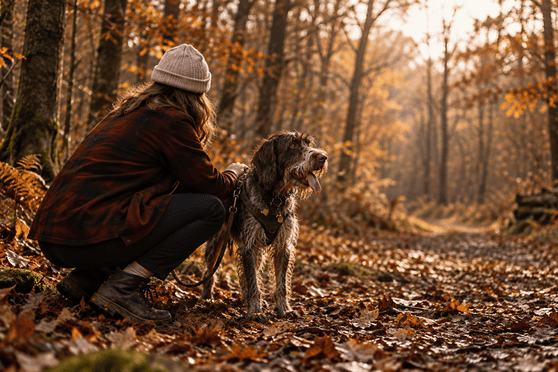
Dogs are particularly exposed to heat during walks. During a heatwave, it is better to go out early in the morning and late in the evening, choose shaded routes, avoid intense exercise and take water with you if the walk is a little longer.
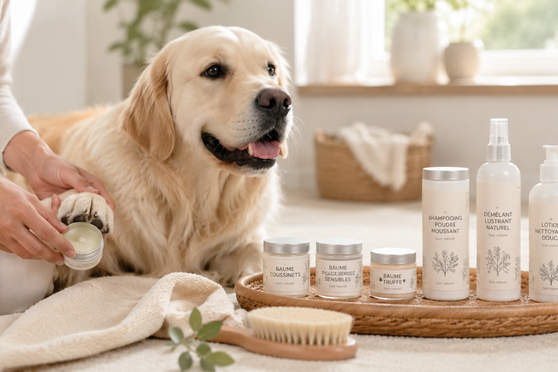
Asphalt, pavements and tarmac can become extremely hot and burn paw pads. Before going for a walk, it can be useful to place the back of your hand on the ground for a few seconds: if the heat is difficult for your hand to tolerate, it is also too much for your dog’s paws.
Older dogs, overweight dogs, sick dogs, very young dogs, flat-faced breeds and dogs with very dense coats need extra vigilance. They may tolerate heat less well and become tired more quickly.
At home, you can offer your dog a cool place, a suitable cooling mat, a slightly damp towel or an indirectly positioned fan, without placing them in a constant draught. The aim is to help them cool down gently, without causing thermal shock.
Protecting your cat during a heatwave
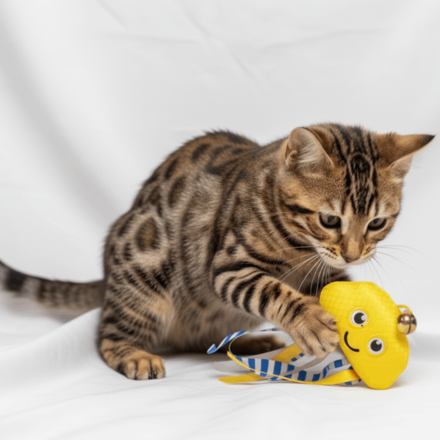
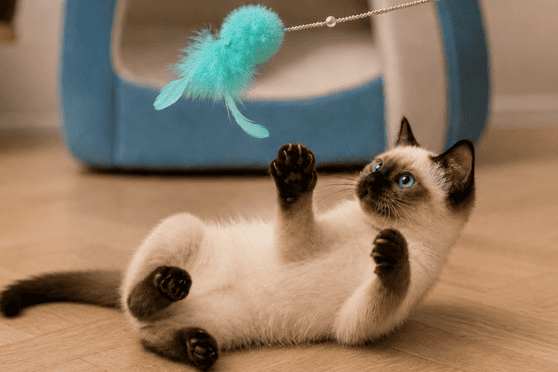
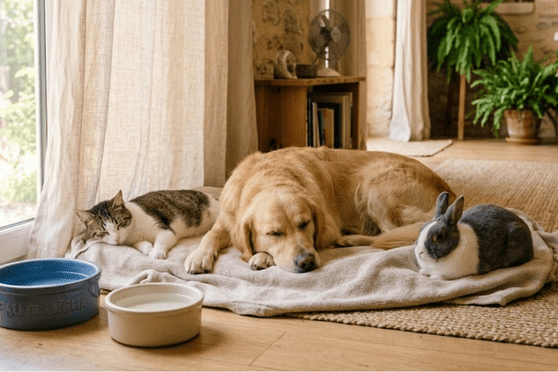
Cats often seek out cool areas on their own: tiled floors, dark rooms, under furniture or in the bathroom. They should be allowed access to these places, and should not be shut in a room that heats up.
Some cats drink very little. During very hot weather, it is useful to provide several bowls of water, place them away from the litter tray and food, and refresh the water regularly. A water fountain may encourage some cats to drink more, but it does not replace careful observation.
For a cat that goes outdoors, it is better to avoid leaving them outside during the hottest hours if they do not have safe access to shade and water. A balcony in direct sunlight, even if secured, can become very dangerous.
As with dogs, older, unwell, very young or overweight cats should be monitored more carefully. A cat that seems listless, breathes abnormally, remains withdrawn or reacts differently from usual should be taken seriously.
Protecting small pets: rabbits, guinea pigs, ferrets, birds and reptiles
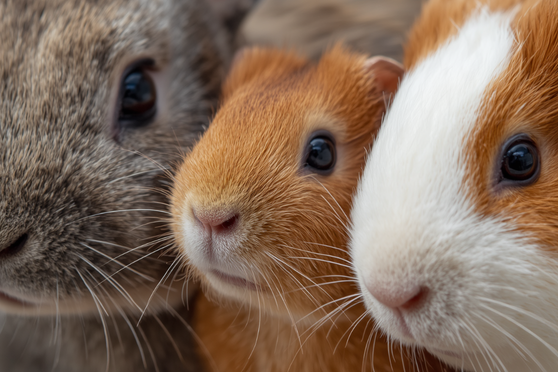
Small pets include very different species. There is therefore no single rule that applies to all of them, but many small animals are very sensitive to high temperatures, especially rabbits, guinea pigs, rats, hamsters and ferrets.
The cage, enclosure or terrarium should never be placed in direct sunlight, behind glass or in a room that heats up quickly. A calm, shaded, well-ventilated place without a direct draught is preferable.
For rabbits and guinea pigs, water must be available at all times. Check that water bottles are not blocked and that bowls cannot easily be tipped over. A bottle of cool water wrapped in a cloth can sometimes be placed near the resting area, as long as the animal can always move away from it.
In rabbits, the ears play an important role in regulating heat. During very hot weather, gentle cooling measures can help, but ice-cold water, immersion or sudden temperature changes should be avoided.
For birds, make sure they have shade, clean water, no direct sunlight on the cage and good ventilation without a strong draught. For reptiles, particular care is needed: their needs depend on the species, the terrarium and their usual warm and cool zones. If in doubt, it is better to ask a specialist exotic pet vet for advice rather than suddenly changing their environment.
Protecting your horse in very hot weather
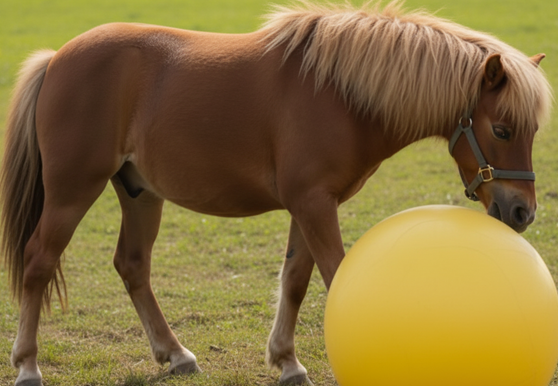
A horse must have access to clean, fresh water at all times. During a heatwave, its water intake may increase significantly, especially if it sweats. It is therefore important to regularly check drinkers, buckets or water troughs and make sure they are working properly.
Access to shade is essential, whether the horse lives out or spends only part of the day outdoors. A shelter, trees or a shaded area should allow the horse to protect itself from the sun. Stable ventilation should also be checked, as hot, humid and stagnant air can become uncomfortable.
Work should be adapted. Intense sessions, transport and prolonged effort should be avoided during the hottest hours. If the horse needs to work, it is better to do so early in the morning or in the evening, reduce the intensity, allow breaks and cool the horse down gradually after exercise.
A salt lick can be useful for some horses, especially when they sweat heavily. Electrolytes may also be appropriate in certain situations, but they should not be given at random. Their use depends on the horse, its activity, how much it sweats and the advice of the professional who follows its care.
Insects can also increase discomfort in summer. Suitable protection against nuisance insects, a clean shelter and regular monitoring of the horse’s general condition all contribute to its wellbeing during very hot weather.
Warning signs to take seriously
An animal suffering from heat may show rapid or difficult breathing, abnormal panting, extreme tiredness, weakness, an unsteady gait, excessive drooling, very red or unusually pale mucous membranes, trembling, unusual agitation or withdrawal.
In small pets, the signs may be more subtle: lying stretched out in an unusual way, rapid breathing, very hot ears in rabbits, refusal to eat, weakness or reduced response. In horses, excessive sweating or, on the contrary, a lack of sweating despite the heat, rapid breathing, lethargy, a raised temperature or unusual behaviour should raise concern.
Do not wait for all the signs to appear. If in doubt, it is better to contact a vet quickly. Heatstroke can progress fast and cause lasting effects, even if the animal seems to improve after a few minutes.
What to do if you suspect heatstroke
The first thing to do is to move the animal to a cool, calm and shaded place. Then call a vet or emergency veterinary service, explain the situation and follow their instructions.
While waiting, you can begin gradual cooling with fresh, never ice-cold water. Do not suddenly immerse the animal in cold water, and avoid causing thermal shock. The aim is to help the body lower its temperature gently.
You can offer water, but do not force the animal to drink. A very weak, disoriented or unconscious animal should not be forced to swallow, as this can be dangerous.
Even if the animal’s condition seems to improve, a veterinary consultation remains important. The consequences of heatstroke are not always immediately visible.
Preventing problems rather than reacting in an emergency
The best protection against a heatwave is preparation. Before the hottest days arrive, it is useful to check water points, shaded areas, ventilation, walking times, essential journeys and care arrangements if you need to be away.
Every animal has its own sensitivity. A sporty dog will not necessarily cope with a walk in the middle of the afternoon. An independent cat can become trapped on a balcony that is too hot. A rabbit can suffer very quickly in a poorly ventilated room. A horse in a field needs real access to water and shade, not just an open space.
Looking after an animal during a heatwave means adapting their daily routine with care. Sometimes small, simple actions can make a real difference: fresh water, shade, rest, observation and a call to the vet as soon as something seems unusual.








Leave a comment