Rabbit, guinea pig, hamster, pet rat, ferret, gerbil, bird or reptile: NAC often appeal because of their small size, their gentleness or their originality.
But adopting a NAC should never be just a sudden crush. Behind the image of a small animal that seems easy to live with, there can be very specific needs, a budget to plan for, time to devote and a real commitment over several years.
Before welcoming one of these companions into your home, there are therefore some questions worth asking honestly.
A small animal does not necessarily mean a small commitment
One of the most common mistakes is to think that a small animal needs little space, little care and little attention. This is rarely true.
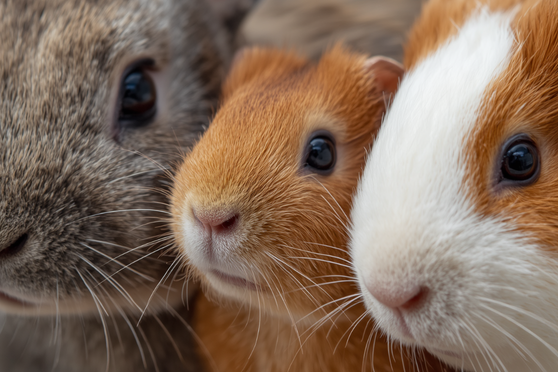
A rabbit needs space to move around, run, explore and express its natural behaviours. A guinea pig needs unlimited hay, a suitable diet and often the company of another guinea pig. A ferret requires time, supervision and a secure environment. Even a hamster, tiny as it may be, needs a well-designed habitat, hiding places, a suitable wheel and respect for its natural rhythm.
The first question to ask is therefore not: “Is it cute?” but rather: “Can I really offer it the living conditions it needs?”
Do I have enough space, time and availability?
A NAC does not simply live “in a cage”. For many species, a permanently closed cage is even an outdated view of their wellbeing.
Depending on the animal chosen, you will need to provide a space that is large enough, secure and easy to clean, but also time out of the enclosure, observation, gentle interactions and suitable activities. A rabbit or a ferret is not content simply to be watched from a distance. A pet rat can be very sociable and seek contact. A guinea pig, even if more cautious, needs a stable, calm and reassuring daily routine.
You also need to accept that each species has its own rhythm. Some animals are active in the evening or at night. Others cope poorly with excessive handling. Some are not especially suited to very young children, not because they are uninteresting, but because they are fragile, sensitive to stress or difficult to hold correctly.
Do I really understand its dietary needs?
Food is one of the most important points, and one of the most underestimated.
For rabbits and guinea pigs, hay is not just an extra: it plays a central role in digestive balance and the natural wearing down of the teeth. The guinea pig also has one essential particularity: it does not produce its own vitamin C and must therefore receive it through its diet or, if necessary, through suitable supplementation.
Each species has its own needs. Some very common foods can be useless, unsuitable or even dangerous. Before adopting, it is therefore essential to seek information from reliable sources, specialised associations or a vet familiar with NAC.
Have I planned for veterinary costs?
A NAC may seem inexpensive to buy or adopt, but its healthcare should not be minimised.
It may need a vet who specialises in NAC, or is at least used to treating them, and this can sometimes be harder to find than a standard clinic for dogs and cats. Depending on the species, you may need to plan for consultations, dental care, possible neutering, treatments, tests or emergencies.
A small animal can unfortunately lead to significant healthcare costs. It is better to face that reality before adoption than to discover it in an emergency.
What will its life look like in one year, five years, ten years?
Adopting is not only about imagining the first few days. It also means thinking about the years that follow.
Who will look after the animal during holidays? What will happen in the event of a move? Will the planned space still be available? Will the children really remain involved over time? Can the budget be maintained in the long term?
Some NAC live for a short time, while others can accompany their family for many years. A rabbit, for example, can live much longer than many people imagine. This lifespan should be taken into account from the very beginning.
Adopting through an association: often a more supported approach
Adopting a NAC through a specialised association can be a very beautiful step, provided it is seen as a serious commitment.
Associations generally know the animals they offer for adoption: their character, habits, vulnerabilities, needs and sometimes their history. They can guide you towards an animal that is truly compatible with your home, rather than towards a simple visual crush.
This exchange is valuable. It helps avoid certain mistakes, better prepare for the animal’s arrival and build a more lasting adoption.
Falling for one, yes, but consciously
There is nothing wrong with falling in love with a rabbit with big ears, a curious guinea pig or a mischievous pet rat. Emotion is often part of the meeting.
But it should not be the only reason to adopt.
A NAC is not a small gift, a decorative presence or an easy way to “start” with an animal. It is a living, sensitive being, with its own language, needs, fears, habits and personality.
Asking the right questions before adoption does not cool the desire to love. On the contrary, it gives that love the best chance of becoming a beautiful story, respectful both of the animal and of the family welcoming it.





Leave a comment