
Autumn is probably one of the most beautiful seasons for walking your dog: the light is soft, the forest smells of...
Latest posts
-
 Autumn with your dog: small dangers to watch out for on walksRead more
-
 Pet Parents: Welcome to a Club We’re (Finally) Happy to Own Up ToRead more
Just ten years ago, calling yourself your cat’s “parent” would have raised a few eyebrows. People would smile...
-
 Halloween with your pet: ideas, treats and precautions for dogs, cats, rabbits and horsesRead more
Halloween is slowly making its way into our homes, with pumpkins appearing on doorsteps and orange garlands...
-
 Rewarding your dog without spoiling them: finding the right balance between treats, praise and playRead more
Treats, praise or play: rewarding your dog well is not about giving more, but about choosing the right moment and the...
-
 How to Keep Your Dog Busy at Home: 4 Situations and SolutionsRead more
It has been raining since this morning, and the evening walk ended at the corner of the street. Your dog has just had...
-
 Waste-Conscious Treats for pets: giving pleasure without wasteRead more
Seeing a close date on a pet product can make you hesitate. That is perfectly normal. When it comes to our...
-
 Intelligence Games for Dogs and Cats: The Secret to a Happy (and Finally Tired) PetRead more
He has already chewed through half the sofa. He barks at the door as soon as you leave for work. She spends all day...
-
 What toys should you choose for your cat? Understanding their preferences to help them play betterRead more
All cats play, but not always in the same way. Some pounce at the slightest movement, others prefer to watch for a...
-
 Adopting a NAC: the questions to ask before falling for oneRead more
Rabbit, guinea pig, hamster, pet rat, ferret, gerbil, bird or reptile: NAC often appeal because of their small size,...
-
 Dog care: what is it for, and what should you do every day?Read more
Caring for your dog is not only about feeding them, walking them and giving them attention. Their skin, coat, paw...
Blog categories
Search in blog
Pet Parents: Welcome to a Club We’re (Finally) Happy to Own Up To
Just ten years ago, calling yourself your cat’s “parent” would have raised a few eyebrows. People would smile politely, with that slightly amused expression that said, “Did she really just say that?” Today, the term has its own Wikipedia entry, sociological studies, a multi-billion-pound industry and even inheritance disputes fought out in front of solicitors.
Pet parenting is no longer an inside joke shared between animal lovers. It’s a social phenomenon, documented, measured and apparently here to stay.
So we’re not going to ask you to justify calling your dog “my son” or celebrating his birthday with a sugar-free cake. Instead, we’ll take you on a little journey around the world to explore the phenomenon, discover where it really comes from, have a laugh at the names we give our furry companions and finish with a few inheritance stories that prove loving an animal can sometimes turn into a full-blown legal soap opera.
Coffee at the ready? Let’s go.
A (Not Quite Exhaustive) World Tour of the Biggest Pet Parents
If we were to put together a global podium for animal lovers, Latin America would proudly sweep the top spots.
Argentina and Mexico lead the way, with 80% of households owning a pet, followed by Brazil at 75%. Close behind are Russia at 73% and the United States at 70%.
France sits at around 65% of households owning a pet. That puts us comfortably among the frontrunners, although we’re not quite ready to claim the gold medal.
Across Europe, the picture is more varied than you might expect.
Dogs are particularly popular in the Czech Republic and Poland, where around 40% of households own one, as well as in Portugal, Lithuania, Ireland and Spain.
In France, however, cats rule the roost: 31% of French households have a cat, compared with 20% that own a dog. This preference is shared by Belgium, Austria, Germany and Denmark.
But the unexpected title of Europe’s most pet-friendly country goes to Romania, where 47% of households have a cat and 46% own a dog. It seems almost nobody escapes having a four-legged companion.
Next stop: Asia, where the figures tell a different story.
In South Korea, only 31% of households own a pet, followed by Hong Kong at 35% and Japan at 37%. All three are well below the global average.
But be careful not to confuse “fewer pets” with “fewer pet parents”.
In fact, it’s in urban China that the phenomenon is taking on an almost philosophical dimension.
In major cities such as Beijing, Shanghai and Shenzhen, some wealthy, highly educated young people are deliberately choosing to have a pet rather than a child.
These companions have even earned themselves a nickname: “mao hai zi”, literally meaning “fur children”.
It’s a phenomenon that coincides, perhaps unsurprisingly, with a dramatic fall in the birth rate. China’s birth rate dropped from 12.07 births per 1,000 inhabitants in 2015 to just 6.39 in 2023.
Let’s make a quick detour to Australia, the undisputed champion of luxury pet care.
In 2025, 73% of Australian households own a pet, with the market valued at an estimated 33 billion Australian dollars.
Over three years, an additional 800,000 households have welcomed an animal into their homes. That represents 2.9 million more pets since 2021, while spending on pet services has increased by 30% over the same period.
Five-star doggy day care is no longer a joke. It’s an entire industry.
And what about France?
In 2024, French people spent €6.6 billion on their pets. Our households are home to 16.6 million cats and 9.9 million dogs.
Most importantly, 68% of French pet owners consider their animal a fully fledged member of the family.
One figure that, on its own, sums up this entire article.
Why Now? What Science Really Has to Say
The easy explanation would be: “People aren’t having children any more, so they’re getting dogs instead.”
But the reality is more nuanced and, frankly, much more interesting.
Researchers studying the subject describe child-free pet parents as a phenomenon that primarily affects the wealthiest countries.
The highest rates of voluntary childlessness are found in G7 nations such as the United States, Germany, France, the United Kingdom and Japan.
That’s rather counterintuitive in itself, as you might have expected the opposite in societies where resources are plentiful.
For some openly child-free pet parents, an animal becomes a kind of intermediate relationship: it fulfils the desire to care for someone without the round-the-clock responsibilities that come with having a biological child.
Other researchers prefer to add nuance rather than draw definitive conclusions.
Hungarian biologist and animal behaviour specialist Enikő Kubinyi acknowledges that some studies suggest dog owners have a more negative view of parenthood and that mothers who own dogs find raising children more demanding.
However, she is quick to point out that the origins of this phenomenon are far more complex than a simple case of one replacing the other.
Some researchers even go so far as to describe pets as “practice children”: a step towards starting a family rather than a substitute for one.
What is certain is that the trend is particularly widespread among younger generations.
67% of millennials and Generation Z say they would rather have a dog than a child.
And this shift is bringing about tangible changes in the workplace.
Around 60% of young American workers say they would leave their job if it prevented them from properly caring for their pet, and almost 10% have already done so.
Hardly an insignificant trend, especially when France recorded just 663,000 births in 2024, a fall of 21.5% compared with 2010.
Correlation does not mean causation, but the timing of these developments is difficult to ignore.
In short, being a pet parent is neither a passing fad nor the whim of a lonely city dweller.
It is one of many responses to lives that are being shaped differently from those of previous generations, with different priorities, different economic pressures and a need for affection that hasn’t changed one bit.
The Name: Our First True Act of Love
Choosing a name for your pet is often the very first parental act you perform, and we take it extremely seriously.
In France, the national pet identification register, I-CAD, even keeps meticulous records of the phenomenon, including the famous “letter of the year”.
After V in 2024, it was A’s turn in 2025, with Aiko topping the list of dog names, accounting for 11,171 registered dogs.
Cat owners, meanwhile, cheerfully ignore the rule.
The most popular cat names in 2025 remain Nala and Simba, which have held the top positions for the seventh consecutive year, followed by Athena.
The Lion King has clearly left its mark on several generations of pet owners.
Nala and Simba also feature among the most popular names shared by both dogs and cats, proving that pop culture has become a source of inspiration for pet names in its own right.
And here’s a statistic that might surprise you, because it goes against everything you might expect:
We actually give our dogs human names less often today than we did fifty years ago.
The proportion of dogs given traditional human first names has fallen from 50% in the 1970s to just 35% today.
In other words, the more we love our pets as members of the family, the less likely we are to call them “Jean” or “Marie”.
The same research also shows that choosing a human name varies according to breed.
Huskies are less likely to receive human names than spaniels, Chihuahuas or pit bulls.
There are regional differences, too. People in western France are more reluctant to give their dogs human names than those living in the north and east.
Proof, if any were needed, that even the sociology of dog names has its regional variations.

Unusual Cases: When a Pet (Almost) Becomes an Heir
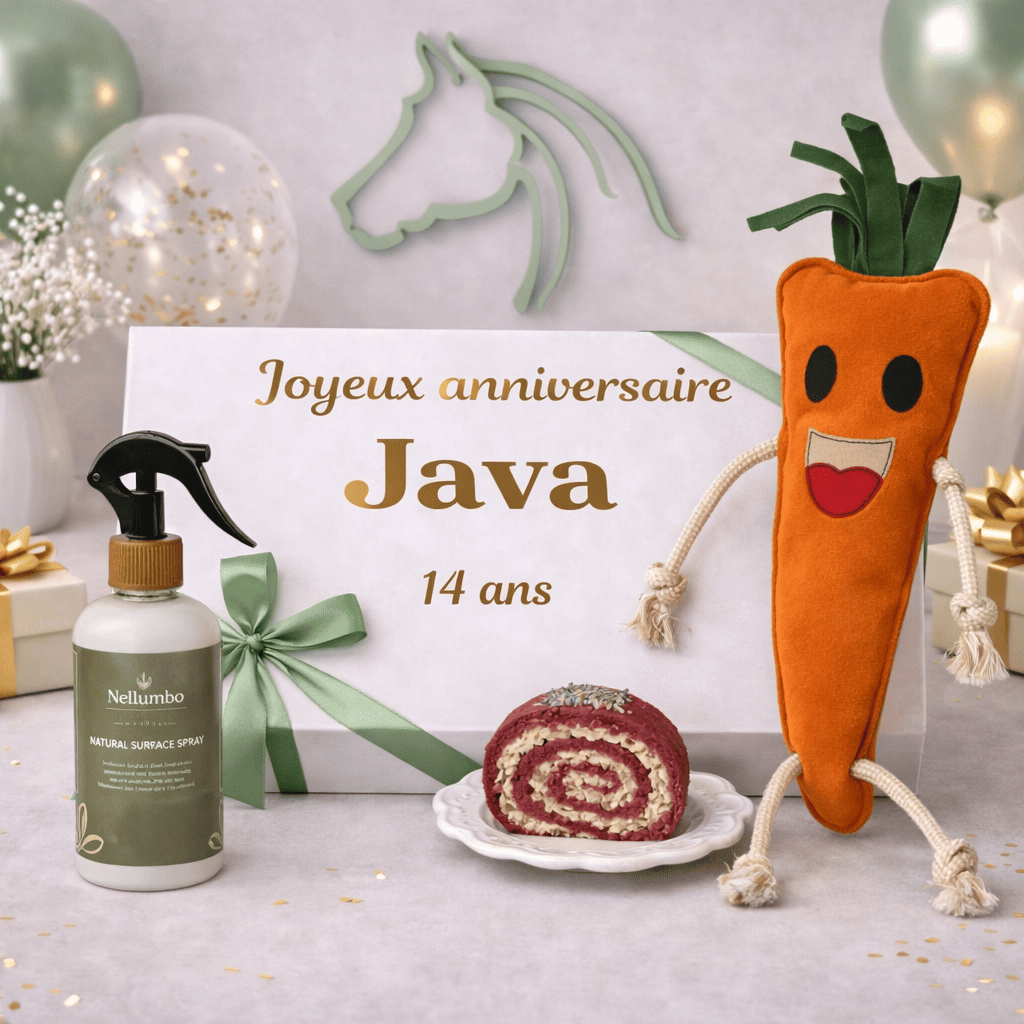
It would be impossible to talk about pet parents without mentioning one of the most extraordinary stories of the decade: Choupette, Karl Lagerfeld’s Birman cat.
When the fashion designer died in 2019, the idea that his cat might inherit part of his fortune, estimated at several hundred million, made headlines around the world.
Except that French inheritance law is rather stricter than you might imagine.
An animal cannot inherit property because, although it is recognised as a sentient being, it does not have legal personality.
The legal workaround?
A legs avec charge, or a bequest subject to obligations.
This involves appointing a human heir who is required to use part of the estate to continue caring for the animal.
That is how Françoise Caçote, Karl Lagerfeld’s former housekeeper, became Choupette’s official carer, with around $1.5 million reportedly set aside specifically for the cat’s upkeep.
Except that legal reality is sometimes considerably less glamorous than the legend.
Seven years after the fashion designer’s death, Choupette reportedly still hasn’t received a single penny of that inheritance.
Her carer is said to be paying for the cat’s needs herself, while the estate remains the subject of a legal dispute.
Even the world’s richest cat can find herself trapped in the twists and turns of an inheritance battle.
Something to bear in mind, with a smile, before assuming you can simply “leave everything” to your pet without encountering any complications.
Another area in which animals have carved out a genuine place for themselves in family law is divorce.
Since 2022, Spain has introduced new rules: pets are now taken into account during divorce proceedings, as part of legislation designed to offer domestic animals greater protection within the country’s civil code.
A case had already set a precedent back in 2019.
It involved a West Highland Terrier named Cachas. The judge ruled that the animal was jointly owned by the two former partners, with the dog spending six months with each of them and the expenses being shared equally.
Since then, a judge has been able to decide whether shared custody is possible and can even order maintenance payments towards the animal’s care.
Maintenance payments for a dog: twenty years ago, the idea might have raised a few amused smiles.
Today, it is a serious legal practice.
And What Does the Law Say About All This?
This legal shift is not unique to Spain.
In France, the Civil Code has described animals as “living beings endowed with sentience” since February 2015, rather than simply treating them as movable property.
Spain followed in 2021 with legislation that goes even further in matters of family law.
Germany, Switzerland, Austria, France and Portugal had already recognised animals as sentient beings before Spain did.
So it is hardly surprising that the term “pet parent” is sounding less and less like an inside joke.
Slowly but surely, the law is beginning to reflect the consequences of this changing relationship.
We’re Happy to Own It. So What?
Ultimately, being a pet parent doesn’t mean denying that an animal is still an animal.
It simply means acknowledging, without embarrassment, the place that animal genuinely holds in our lives.
The desire to care for someone. A presence that gives structure to our days. And a love that has never needed a degree in biology to be legitimate.
Whether you belong to Team “Traditional Name” or Team “Inspired by The Lion King”, whether your pet food budget rivals the monthly repayments on a personal loan or not, one thing is certain:
You are neither alone nor ridiculous.
You are part of a worldwide movement that has been documented, studied, measured and is apparently here to stay.
And that’s rather good news.
Related posts
-
 Candy Horse Treats for Horses – Natural & Delicious
Discover Candy Horse treats for horses: natural, handcrafted, and tasty. Reward your horse with healthy snacks and...Read more
-
 Healthy Rabbit Treats: Combining Taste and Nutrition
Treat your rabbit with healthy and natural snacks! Discover which treats to favor (herbs, flowers, hay, dried...Read more
-
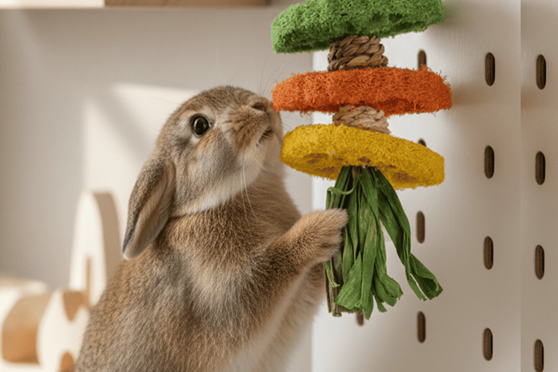 Chew Toys for Rabbits: Essential for Their Well-Being and Teeth
Our rabbits, like all good little nibblers, love to chew! What might seem like a simple pastime is in fact vital to...Read more
-
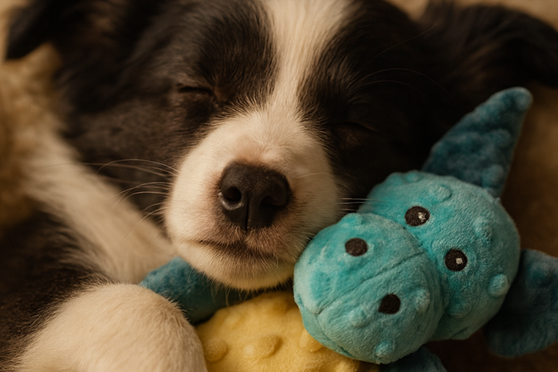 Does My Dog Need a Comfort Toy?
A comfort toy is more than just a plaything. It offers reassurance, reduces stress, and helps ease loneliness –...Read more
-
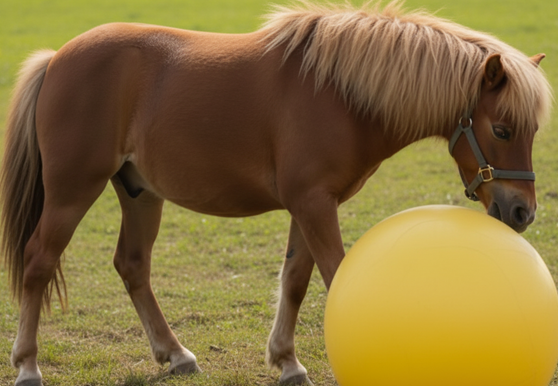 Horse Toys: How to Keep Your Horse Busy and Prevent Boredom
Horses are naturally curious, social, and active animals that need variety and stimulation to thrive. When deprived...Read more
Leave a comment