Dogs live close to us, walk on all kinds of surfaces, sometimes roll in the grass and face cold, heat, humidity, walks, baths and seasonal changes. Their skin, coat and paw pads are therefore exposed to many small everyday stresses.
Creating a care routine for your dog is, above all, about taking a few minutes to observe them, support them and preserve their comfort with simple gestures adapted to their real needs.
A care routine is not only about cleaning your companion. It is mainly about knowing what is normal for them: their usual smell, the way they walk, the appearance of their skin, eyes, ears, teeth, claws and paw pads. This knowledge helps you spot an unusual change more quickly.
Why dog care is important
A dog’s skin plays an essential role: it protects the body, contributes to comfort and can reveal certain imbalances. Redness, itching, dandruff, a dull coat, small irritations or unusual odours can sometimes indicate that closer attention is needed.
Regular care helps you get to know your animal better. By gently handling their paws, coat or certain sensitive areas, you can more easily spot a small wound, a dry patch, irritation, a tick, a grass seed, pain or a change in appearance. This observation never replaces veterinary advice, but it helps you react sooner when something seems unusual.
How often should you do a dog care routine?
There is no ideal frequency that applies to every dog. A long-haired dog, a very active dog, a dog that often swims, an older dog or a dog with sensitive skin will not have the same needs as a short-haired dog that mostly lives indoors.
On a daily basis, care can be very quick: observe the way your dog walks, check the eyes, see whether the dog is licking a lot, scratching, seeming uncomfortable or showing visible dirt after a walk.
Several times a week, you can take a few minutes to brush the coat, check the paw pads, look at the ears and inspect the areas where the harness or collar may rub.
At regular intervals, depending on your dog’s needs, you can check the claws, observe the teeth and gums, clean certain sensitive areas, use a gentle shampoo occasionally or apply a suitable care product to the paw pads, nose or a dry area.
What should you check during a dog care routine?
A good care session can follow a simple order, more or less the same each time. This reassures the dog, makes handling easier and helps avoid forgetting certain areas.
The coat and skin
Brushing is often the most natural starting point. It helps remove dead hair, reduce knots, air the coat and observe the skin. Depending on the coat type, brushing may be needed more or less often, but the gesture should always remain gentle.
It is useful to gradually brush the whole body: the back, sides, chest, neck, legs, behind the ears, under the belly if the dog accepts it, around the tail and in areas where knots form easily. The goal is not only aesthetic. It is also a way of getting the dog used to being handled all over the body.
During brushing, you can check for the absence of knots, red patches, dandruff, scabs, small wounds, spots, hairless areas, visible parasites or ticks. The armpits, inner thighs, belly, base of the tail and the area behind the ears are often forgotten, even though they can easily hide irritations, grass seeds or small foreign bodies.
The paw pads and spaces between the toes
The paw pads deserve particular attention, because they are in direct contact with the ground. After a walk, especially on hot, cold, rough, wet, stony or salted ground in winter, it is useful to quickly check your dog’s paws.
Check that the paw pads are clean and that there are no cuts, redness, cracks, very dry areas, swelling or foreign bodies stuck between the toes. A small stone, dried mud, a piece of wood, salt or dirt stuck between the toes can cause significant discomfort.
A burn or irritation on the paw pads may appear as redness, sensitivity to touch, damaged skin, repeated licking, an unusual gait or refusal to put the paw down. A dog that limps, suddenly pulls their paw away or repeatedly licks the area should always draw attention. If the limping continues, or if there is a wound, swelling or clear pain, it is best to ask a vet for advice.
A suitable balm can help nourish and protect paw pads when they are heavily used, but it should not be used to hide an injury or pain.
The claws
A dog’s claws should be checked regularly. They can become too long, split, break or interfere with walking. In some dogs, they wear down naturally thanks to walks on varied surfaces. In others, they grow faster than they wear down.
A claw that is too long can change the way the dog stands or interfere with the natural movement of the paw. Dewclaws, when present, should also be checked, as they do not always wear down through contact with the ground.
Claw trimming must be done carefully, because a sensitive part contains blood vessels and nerves. If you do not know where to cut, if the claws are black, if the dog is very anxious or if a claw is broken close to the base, it is better to ask a vet or a professional groomer for help.
The eyes
The eyes should be observed carefully, without trying to clean them unnecessarily. Small light-coloured deposits in the corner of the eye can appear in some dogs and can be gently removed with a sterile non-woven compress, lightly moistened with saline solution or an eye solution suitable for dogs.
However, you should watch for unusual tearing, redness, a closed or squinting eye, swelling, yellow or green discharge, a change in colour, visible discomfort or a dog that often rubs their face. Eyes are delicate: if their appearance changes or if the eye seems painful, it is best to consult a vet quickly.
The ears
The ears should be checked regularly, especially in dogs with floppy ears, dogs prone to ear infections, dogs that often swim or those with a lot of hair around the ear canal.
A healthy ear is generally clean, without a strong smell, without significant redness, without discharge and without excess earwax. You can gently lift the ear to observe the entrance to the ear canal, without inserting anything deeply.
Cleaning should not be systematic if the ears are clean. When it is necessary, use an ear product suitable for dogs and follow the manufacturer’s or vet’s instructions. Cotton buds should not be used, as they can push dirt further into the canal or injure the ear.
A bad smell, a red, painful or warm ear, discharge, excess earwax, a dog that often shakes their head, scratches their ear or tilts their head should be warning signs. In these cases, it is better to ask a vet for advice before increasing the number of cleanings.
The nose and muzzle
A dog’s nose can change slightly in appearance depending on the moment, age, season or environment. Contrary to popular belief, it does not need to be wet all the time to be normal. However, a very dry, cracked, painful nose, thick scabs, sudden loss of colour or a wound deserves particular attention.
A suitable care product can help nourish a dry or weakened nose, but products not intended for dogs should be avoided. If the nose suddenly changes in appearance or if the dog seems uncomfortable, veterinary advice is preferable.
The teeth and gums
The mouth is often forgotten in care routines, even though it can be a major source of discomfort. It is useful to gradually get the dog used to having their lips gently lifted so you can observe the teeth and gums.
You can check for tartar build-up, unusual bad breath, red, swollen or bleeding gums, a broken tooth, a loose tooth or difficulty chewing. A dog that eats less, chews on one side, drops kibble or refuses certain foods may sometimes have dental pain.
Dental care should be adapted to the dog. Some accept tooth brushing with equipment designed for dogs, while others will need a more gradual approach. Suitable chew toys and certain dental treats can also help limit plaque build-up through the mechanical action of chewing. They should, however, be chosen carefully according to the dog’s size, age, jaw strength and digestive sensitivity, and they do not replace proper dental care.
Objects that are too hard should be avoided, as they can damage or break a tooth, as well as treats that are too rich or given in excess. In case of significant tartar, pain, a broken tooth, a loose tooth, strong bad breath or difficulty chewing, it is best to ask a vet for advice.
Areas of friction and the hindquarters
Collars, harnesses, coats or certain accessories can create friction. It is useful to regularly check the neck, chest, armpits, shoulders and the areas where the equipment rests on the skin.
In long-haired, older or sensitive dogs, the hindquarters also deserve gentle monitoring: knots, irritation, dirt, redness or discomfort when the dog sits down. A change in smell, persistent irritation or repeated licking should alert you.
Getting your dog used to being handled
A successful care routine relies as much on trust as on the gestures themselves. A dog that is gradually used to being touched on the paws, ears, mouth, belly or tail will more easily accept everyday care, but also examinations at the vet.
It is best to start with very short sessions, at a calm moment. You gently touch a paw, look at an ear, brush for a few seconds, then praise the dog. The aim is to create a positive association, without excessive constraint.
If the dog stiffens, turns their head away, pulls back their paw, whines, shows their teeth, tries to escape or seems very stressed, do not force them. You can try again later, more slowly, or ask a professional for advice if handling remains difficult.
This habituation is especially valuable for puppies, but it remains possible at any age. With patience, many dogs learn to accept care better, especially when they understand that the gestures are gentle, predictable and never rough.
Natural dog care: keeping things simple and consistent
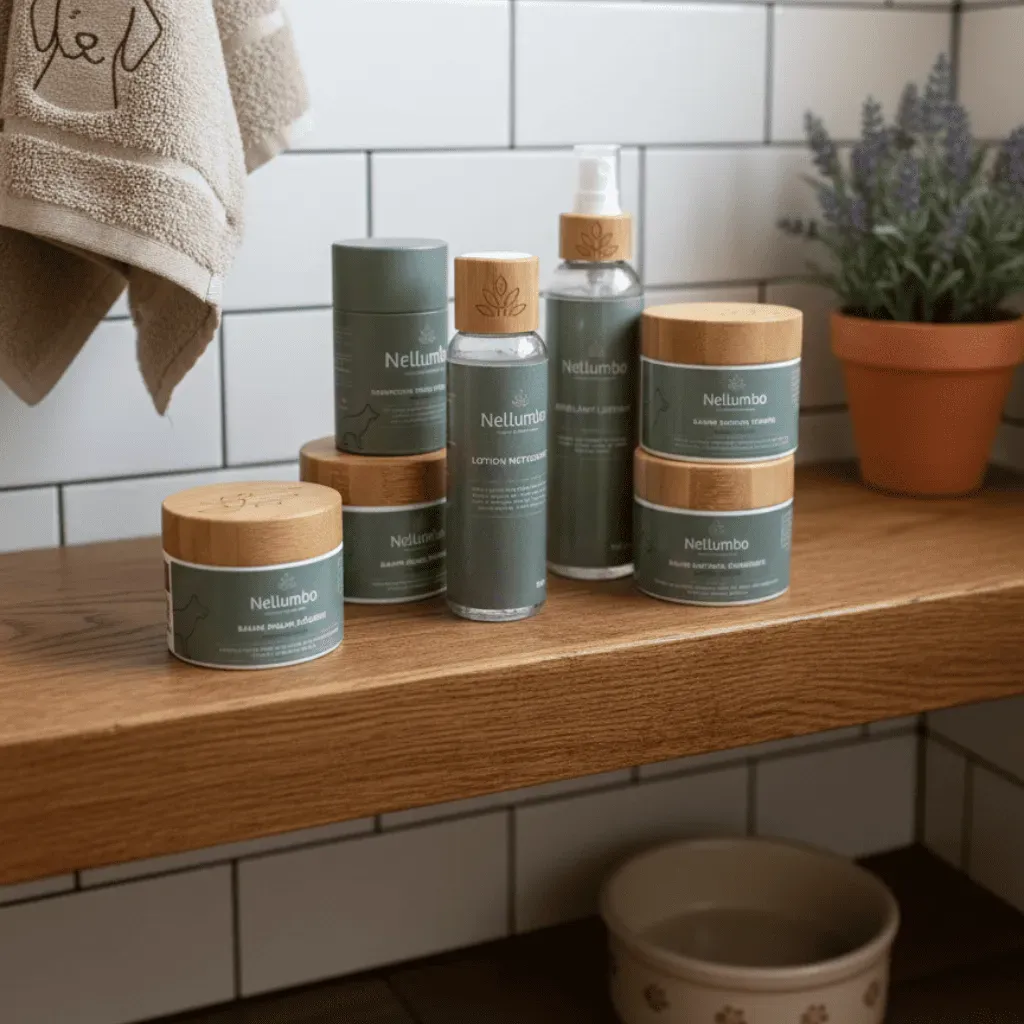 Natural care products can have a real place in a dog’s everyday life, provided they are used with a serious and sensible approach. Natural does not mean universal, nor does it necessarily mean suitable for every animal. It is important to choose products formulated for dogs, avoid improvised mixtures and stop using a product if an unusual reaction appears.
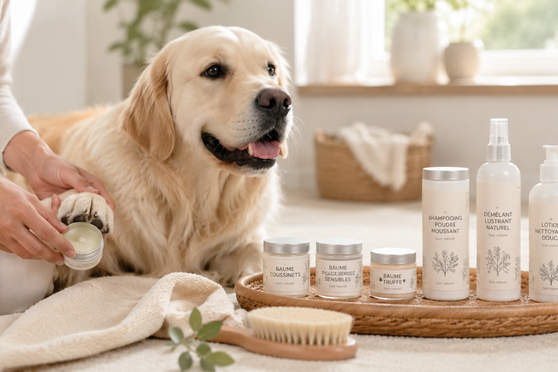
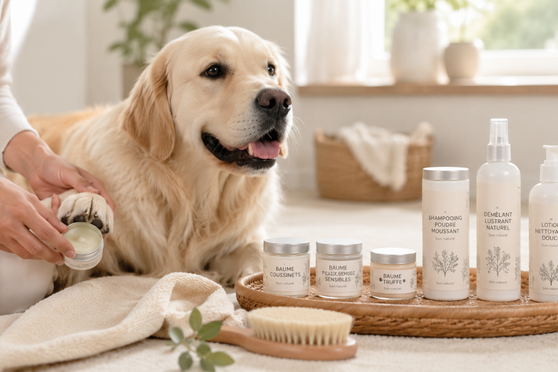
For those looking for a ready-to-use base, a complete set can be a good choice, especially when it brings together several complementary care products. At Merlin&Cie, the wellness care set with 6 natural dog care products, for example, makes it possible to bring together care for paw pads, skin, nose, coat and gentle hygiene in one routine.
The aim is not to use every product every day, but to have the right care products at hand when they are useful: after a walk, during brushing, in periods of mild skin dryness or simply to maintain your dog’s overall comfort.
Turning care into a moment of trust
Successful care is ideally a calm moment. It is better to choose a time when the dog is relaxed, proceed gently, speak in a reassuring voice and not insist if the animal shows real discomfort. For some dogs, a few seconds are enough at first. Regularity and gentleness matter more than duration.
Care can become a moment of closeness, but it must always respect the dog. Avoid sudden movements, overly scented products, applications close to the eyes or mucous membranes without clear instructions, and always observe the skin’s reaction after use.
When should you ask a vet for advice?
Everyday care is useful to support your dog’s comfort, but it should not hide a health problem. In case of significant itching, persistent redness, a wound, hair loss, a strong unusual smell, limping, excessive licking, a painful ear, a red or closed eye, a broken tooth, a damaged claw, a sudden change in behaviour or visible pain, it is best to ask a vet for advice.
Caring for your dog is therefore about finding the right balance: simple gestures, suitable products, attentive observation and plenty of gentleness. A well-thought-out care routine does not need to be complicated to contribute to your companion’s wellbeing.



Leave a comment