Some dogs capture people’s hearts before they have even taken the time to truly learn about them.
Bright eyes, a wolf-like appearance, a spotted coat or a puppy face that instantly melts the whole family… Sometimes, a single photo, video or encounter is enough to start imagining life together. People picture a gentle, affectionate companion who will naturally fit into everyday family life. And when the dog is still a puppy, that feeling often becomes even stronger: what stands out most is the tenderness, the clumsy charm and the irresistibly cute side.
Yet behind that first fascination often lies a much more complex reality.
A dog is never just an appearance. Behind every breed are instincts, energy levels, sensitivities, needs and sometimes centuries of selective breeding for very specific tasks. When those needs are underestimated, the gap between the imagined dog and the reality of daily life can quickly become difficult — both for the animal and for the family.
Some breeds are especially affected by this. Not because they are “bad” or “difficult” dogs, but because they are often chosen for the image they project before people truly understand what they require.
Talking about this is not about blaming owners. Quite the opposite. It is probably one of the most important steps towards more thoughtful adoptions, better understood dogs and healthier long-term relationships.
The trap of “beautiful” dogs
Some dogs trigger an immediate emotional reaction. The husky evokes freedom and wide-open landscapes. The Dalmatian brings back images from films. The Malinois impresses with its intelligence and working abilities. The Shiba Inu fascinates with its almost fox-like appearance.
The problem is not this attraction. It is deeply human.
The real issue begins when aesthetics overshadow everything else, to the point that the dog’s actual needs become secondary.
Because behind a striking appearance is often an animal that has been selectively bred for generations to work, run, search, protect or remain active for hours at a time.
And those instincts do not simply disappear because a dog now lives in a living room.
The Husky: beautiful… and often misunderstood
The Siberian Husky is probably the most symbolic example.
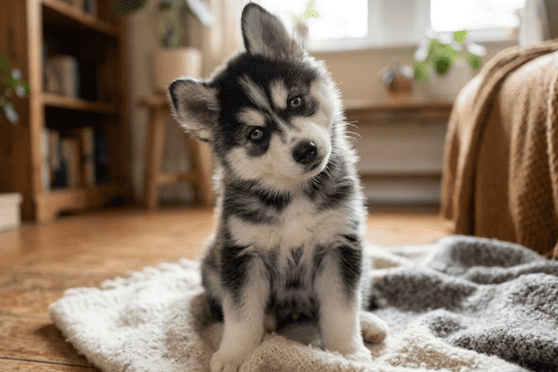
Its pale eyes, wolf-like appearance and northern image make it one of the most desired dogs on social media. As a puppy, it seems almost irresistible. Yet many owners later discover a very different reality.
The Husky is an endurance dog, bred to run long distances in difficult conditions. Its need for movement is enormous. Its independence is too.
A Husky that is not sufficiently stimulated does not become “bad”. It becomes bored. And boredom, in such an intelligent and energetic dog, can quickly turn into destruction, escape attempts or difficult behaviours.
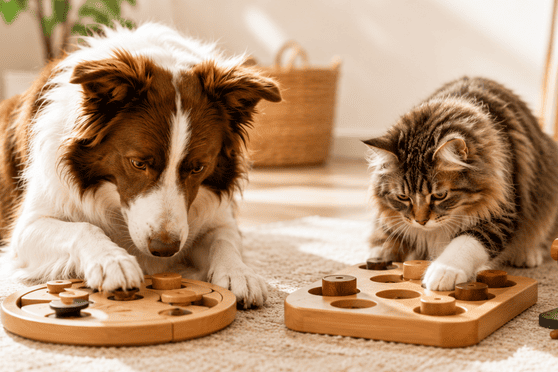
In this context, mental stimulation becomes essential. Interactive activities such as an intelligence game for dogs can help provide mental enrichment — something often just as important as physical exercise.
When the puppy makes people forget the future adult dog
.png) With some breeds, it is not only the personality that surprises people. It is also the physical reality of the adult dog.
With some breeds, it is not only the personality that surprises people. It is also the physical reality of the adult dog.
Newfoundlands, Saint Bernards and some shepherd breeds attract huge affection as puppies. Their oversized paws, awkward movements and teddy-bear appearance create an image of softness and reassurance.
But a few months later, families may find themselves living with a very large, powerful dog that requires space, organisation, time and sometimes significant physical strength.
At that point, what started as an emotional decision becomes a practical reality.
And that is often when people realise that loving a dog is not always enough to meet its needs properly.
The Malinois: above all, a working dog
Today, the Malinois suffers from a very particular kind of popularity.
Widely seen in dog training videos, sports demonstrations and working dog units, it fascinates people with its intelligence and impressive abilities. Many imagine it as the “perfect dog”.
But those qualities come with enormous demands.
The Malinois was bred to work. Truly work. It needs activity, learning, structure and mental stimulation — far more than many traditional companion dogs.
Without this, frustration can develop very quickly.
Chewing activities, scent work and interactive games therefore become valuable daily outlets. A durable chew toy, a snuffle mat or training treats obviously cannot replace genuine physical and mental exercise, but they can contribute to a healthier daily balance.
The “teddy bear” breeds: when appearance distorts expectations
Some dogs become victims of their soft and comforting appearance.
The Chow Chow, Akita Inu or Shiba Inu are often perceived as calm, easy-going and highly affectionate dogs. Their almost cartoon-like appearance strongly shapes owners’ expectations.
Yet many of these breeds are independent, reserved and far less demonstrative in the way they express affection.
For families expecting an intensely affectionate relationship, that difference can feel surprising.
Once again, the issue is not the dog itself, but rather the expectations projected onto it.
Boredom: a largely underestimated factor
Many behaviours labelled as “problematic” actually stem from a lack of stimulation.
A dog that destroys objects, barks excessively or seems impossible to manage is not necessarily a “difficult” dog. In many cases, it is simply a dog whose natural needs are not being sufficiently fulfilled.
Play, enrichment and food-search activities therefore have real behavioural value.
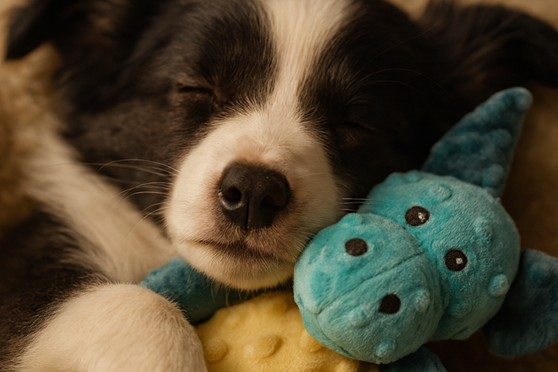
Simple objects such as a large rope toy, an interactive tug toy or a large comforting plush toy can help channel certain tensions when integrated into a proper daily routine.
For puppies and young dogs, short and regular training sessions are also essential. Small training treats for puppies can help reinforce learning in a positive and consistent way.
 Choosing a dog for what it truly is
There is absolutely nothing wrong with loving a particular breed.
The real question is different: what does living with this dog for ten, twelve or even fifteen years truly involve?
Its energy level. Its sensitivity. Its need for companionship. Its relationship with solitude. Its need for mental stimulation. Its adult size. Its instincts.
A dog can be stunningly beautiful — and still be completely unsuited to a particular lifestyle.
And conversely, breeds that are less fashionable sometimes fit much better into a family’s real daily life.
Better information to prevent abandonment
Most abandonments are not born from cruelty. They often result from a mismatch between expectations and reality.
A dog adopted on impulse grows up. Its energy changes. Its personality develops. The constraints become clearer. And some families realise too late that they were not prepared.
Better education before adoption is probably one of the most important ways to reduce these situations.
Understanding a breed does not simply mean watching cute videos or looking at beautiful photos. It means understanding what that dog was originally bred to become.
Conclusion
A dog is never a decoration, a trend or a living teddy bear.
Behind every appearance is a sensitive, intelligent and complex animal with its own specific needs.
And perhaps that is where the real relationship truly begins: when we stop choosing a dog for the image it projects — and finally learn to love it for what it truly is.





Leave a comment